


EVA Food Boots: Practical Footwear for Food Processing and Commercial Kitchens
In food processing plants, commercial kitchens, and catering facilities, footwear plays a critical role in daily safety and productivity. Workers are exposed to wet floors, grease, temperature changes, and long hours of standing or walking. EVA food boots have become a popular choice in these environments due to their lightweight construction, waterproof performance, and hygienic design.
This article addresses the most common questions users ask when considering EVA food boots and explains why they are widely used in food-related industries.
1. What Are EVA Food Boots and How Are They Different?
EVA food boots are made from ethylene-vinyl acetate (EVA), a closed-cell foam material known for its light weight, flexibility, and water resistance. Unlike traditional rubber or PVC boots, EVA boots are usually produced using a one-piece molding process, resulting in seamless construction that helps prevent water penetration.
Compared with heavier work boots, EVA food boots reduce overall weight while maintaining durability and protection. Their flexibility also allows better movement, making them suitable for fast-paced food production and kitchen environments.
2. Comfort for Long Working Hours
Comfort is a major concern for food industry workers who spend long shifts on their feet. EVA material naturally provides cushioning and shock absorption, reducing pressure on the feet, knees, and lower back. The lightweight design minimizes fatigue, especially during extended standing or walking.
Many EVA food boots also feature ergonomic footbeds or removable liners, allowing users to improve fit and comfort based on individual needs. This makes them well-suited for continuous daily use in demanding workplaces.
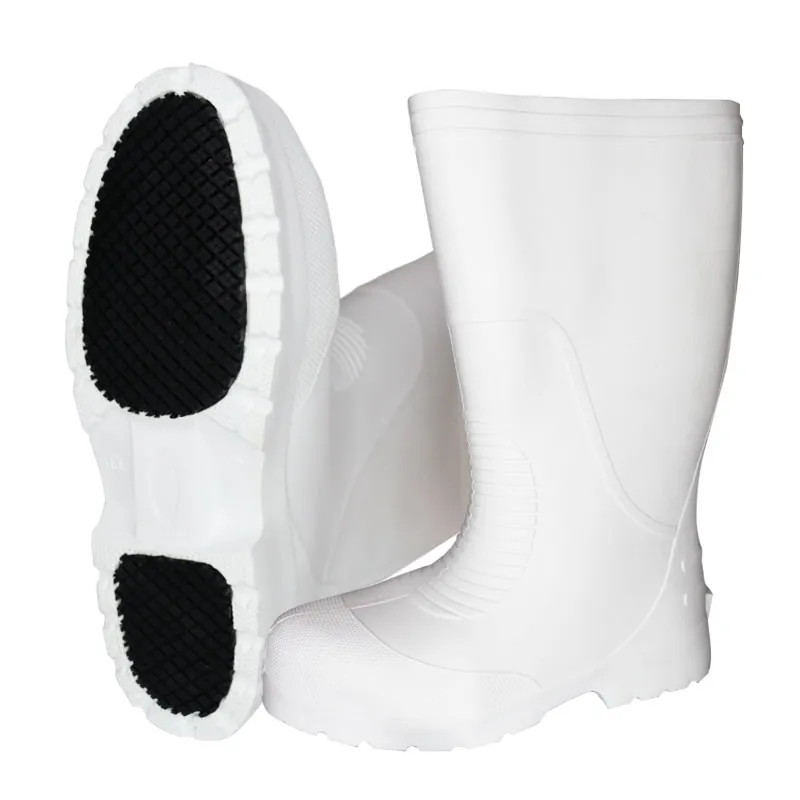
3. Slip Resistance in Wet and Greasy Areas
Slips and falls are common hazards in food processing and kitchen environments. EVA food boots are typically designed with anti-slip outsoles that improve traction on wet, oily, or greasy floors. Deep tread patterns or rubber-reinforced soles help maintain stability on smooth surfaces.
Effective slip resistance not only improves worker safety but also boosts confidence and efficiency in fast-moving work areas where spills are unavoidable.
4. Hygiene and Safety Compliance
Hygiene is a critical requirement in food-related industries. EVA food boots have smooth, non-porous surfaces that do not absorb liquids, making them easy to clean and sanitize. This helps prevent the buildup of bacteria, food residue, or odors.
In addition, EVA boots are waterproof and resistant to common cleaning chemicals, allowing frequent washing without damaging the material. Some designs also include antibacterial properties to further support hygiene standards in food processing environments.
5. How to Choose the Right EVA Food Boots
When selecting EVA food boots, users should consider several key factors:
Fit and Size: Boots should fit securely without being too tight, allowing room for movement and socks.
Outsole Design: Choose boots with proven slip-resistant soles suitable for wet and greasy floors.
Work Environment: Cold storage, wet processing areas, or kitchens may require additional insulation or reinforced protection.
Ease of Cleaning: Smooth surfaces and simple designs make daily cleaning faster and more effective.
Choosing the right pair improves comfort, safety, and durability over long-term use.
Conclusion
EVA food boots offer a reliable combination of lightweight comfort, slip resistance, waterproof protection, and hygienic performance, making them an excellent choice for food processing plants, commercial kitchens, and catering operations. Their ergonomic design helps reduce fatigue, while their easy-to-clean structure supports strict hygiene requirements.
For food industry professionals seeking practical, durable, and comfortable footwear, EVA food boots are a smart and effective solution for everyday work environments.
Comments